Showing posts with label Technology. Show all posts

Monday, 31 August 2015

'Molecules that absorbs starlight in space has been found'


Whale galaxy
“Which molecule is responsible for the absorption of starlight in space”? A question which has been dwelling in minds of many astrophysicists for about a century now has finally been given an answer. In this article, I am going to discuss about this flabbergast molecule which the scientists have been failed to discover until the mid-80s and it was not till 2015, that the theory was finally prove.

So, before even starting this discussion, let me brief you on the definition of starlight, which as the name suggests is the lights being emitted from the stars. It is an electromagnetic radiation which is quite observable from the surface of the earth during night-time. Some component of starlight can even be seen during daytime but that’s highly rare as because the color of a starlight is yellowish-white (similar to that of the sun rays) due to which the color merges with the rays of sun making it invisible for human eyes to differentiate.

Scientist at the University of Basel have been able to identify for the first time in a century a molecule that is indeed responsible for the absorption of starlight in the space, the positively charged cage-fused structure buckminsterfullerene, or so-called ‘football molecule’ (its structure is similar to that of a soccer ball). Buckminsterfullerene is a structure of 20 hexagons and 12 pentagons consisting of 60 carbon atoms, each placed at the vertex of each polygon.


From centuries ago, Astronomers have discovered that the spectrum of star lights arrived on earth with dark gaps, known as interstellar bands but they have not been successful until now to find out which matter in space is absorbing this starlight and causing the “diffused interstellar bands (DIB)”. There are over 400 known starlight in the outer-space today, each having different kind of mystic gaseous shape.

Astronomers have been suspecting that a big complex molecules and gaseous ions based on carbon could be absorbing the starlight. And no molecule other than Buckminsterfullerene matched their criteria which is so far the largest molecule in chemistry to show the property of a wave-particle duality.

Once the Buckminsterfullerene molecule was discovered in the mid-80’s, questions started arousing regarding buckminsterfullerene’s impact on the Dark Interstellar bands (DIB). Researchers started all kind of experiment in order to prove this theoretical aspect into practical reality and finally giving answers to these complicated questions. The experiments didn’t disappointed much as the spectrum measured in the lab did show absorption features at two wavelength that were near two DIB that had been discovered by the astronomers the following year.

Experimental Procedure of the research.

In order to unambiguously prove that these molecules (buckminsterfullerene) absorb starlight and thus produce the DIB, a gas phase spectrum of the ion was needed. To obtain the spectrum in the laboratory using a diode laser, several thousand Fullerenes were confined in a radio-frequency trap and cooled down by collision with high density helium to a very low temperature of around 6 degree Kelvin (conditions were very similar to that of outer space).

Triangulum Galaxy

After the results came out of this experimental research, the resultant absorption measured in the laboratory was coinciding with most of the astronomical data, and have a comparable bandwidths as well as relative intensities. This identifies for the first time two DIB and proves that ionized buckminsterfullerene in the gas-phase in space.

The experiment has helped solving one of the most critical problems in the field of astronomy and has further enhanced the advancing theory of cosmology. The whole research work was carried out at the Department of Chemistry, University of Basel.

Saturday, 4 July 2015

New Astro-Model could give 24 hours' notice of a major space event


Have you ever heard of solar storms? Well, if you haven’t then i will give you a little glimpse about it in this article and you will also come to know about how it can affect the earth’s environment. Solar storms are nothing but a variety of eruption of mass and energy from the solar surface. In simple terms, it is the atmospheric effects felt on the earth’s surface due to events occurring on the sun. More scientifically speaking these occurrences on the solar surface has a direct and adverse effect on the earth’s magnetic field that can bring the power grids, navigation and communication system to a standstill.

These solar strikes generally come in surprise and can create a huge mess even resulting in a worldwide ‘black-out’. If somehow the prediction time of these solar attacks and the time-span for which the strike will remain is known, then it will be easier for the scientists to get some time in analyzing the storm and prepare for precautionary action against it.

NASA has came up with a new model that aims to enhance the prediction time for these powerful solar eruption known as coronal mass ejections (CMEs), to as much as 24 hours from 1 hour notice that the current technology allows. CMEs fire off colossal clouds of charged particles, whose speeds can range from a relatively lower to that of a mind-blogging speed of 3000mph. If the CMEs magnetic fields are allied south to north of the earth’s magnetic field, the storm will not have any effect on the earth’s atmosphere and it will undamagingly pass by, but if they are arranged in the opposite direction, these storms can generate a major space weather event.


NASA’s powerful solar dynamics observatory, whose sole purpose is to continuously keep an eye on sun’s activities and report in case of any sign of flares on sun’s surface have came up with a new forecasting tool which can predict CMEs magnetic field alignment far in advance. The observatory has also been able to analyze the data about the shifting of the CME clouds movement in the aftermath of the eruption. NASA has merged these data sets to predict how these CME cloud evolves and how the magnetic field will be oriented. This invention has indeed taken one step further in depicting the safety of earth’s magnetosphere from these solar astro-storms in future.

If we take a look at the project’s practical application, the scientists from NASA’s Goddard space flight center have tested the new model from record of eight CME (coronal mass ejection) clouds, including the famous false alarm on Jan 9, 2014, in which the earth was saved from the adversity of an enormous solar eruption effect. Future testing are going on which will help the team refine the model further to make these technology more accurate and efficient.


/Anuttam/

Tuesday, 16 June 2015

IBM's superconducting chip can construct ' The future of Quantum Computing'


IBM, one of the world’s leading industries in term of quantum computing, has constructed a new chip, which can be very useful in deciding the future of quantum computing. It is a superconducting chip that can revolutionize the ‘world of Quantum computers’ and can even challenge some theories of quantum physics. The chip is the first in its generation as it can integrate the basic devices needed to build a quantum computer, called qubits, into a two dimensional grid.

Circuitry surface of IBM’s chips are made up of metals, which under extremely low temperature shows super-conducting properties. The chip operates at only a fraction of a degree above absolute zero. Scientists believe that the best way to construct a realistic quantum computer would involve creating grids of hundreds or thousands of qubits working together.


With previous experimental results, researchers have been able to operate qubits only when they were arranged in a line. However, IBM contains the simplest grid possible, four bits arranged in a two by two array.Unlike Binary digits there is a state in which the qubits can effectively work as both 0 and 1 in which is known as superposition state. In this state, the qubits can cut through multifaceted calculation in ways impossible for conventional hardware. Most of the MNC’s and the US Government are working on this technology.


There are different ways to make qubits, but the most conventional ways are those used by IBM and Google. Quantum bits suffer from a ‘quantum effect’ fact which the bits use to represent their data. These datas are very prone to interference.  There are two types of errors occurring in a qubit system, first one being the ‘Bit-flip error’, where a bit representing a 0 changes to a 1 or vice-versa. And the second one is known as ‘phase-flip error’, where a superposition state becomes distorted.

IBM’s new designed chip is constructed in a way (4 qubits arranged in a square) such that it can detect both the ‘bit-flip’ and ‘phase-flip’ errors. One pair of bits is used for checking the errors by the other pair of bits. One bit looks for the ‘bit-flip’ error while the other looks for the ‘phase-flip’ error. This arrangement of the grid can also overcome the interference problem caused by putting the four qubits close together. Further researches are going on, in which the scientists are planning to build a grid of eight qubits arranged in a two by four rectangle.

I hope this experiment succeeds as quantum computers could efficiently take shortcuts through much computation that are difficult for today’s computer. Moreover, quantum computers have mind-blogging applications, but it is stalled by the frailty of quantum computers.


/Anuttam/

Sunday, 17 May 2015

NASA's new airplane lands like a Helicopter and fly like an Aircraft!


Have you ever wondered of a battery powered plane that can land and take-off like a helicopter and fly like an aircraft? NASA has successfully come up with a similar kind of aircraft, which can efficiently act like an aircraft aforementioned. This GL-10 proto-type or nicknamed as ‘Greased Lightening’ have been successfully flight tested by NASA and have transitioned from Hover to wing-borne flight during the period of several flight tests.

The body of the aircraft is made with a very precise build-up structure having a 3.05 meters wingspan, eight electric motors on the wings, and two electric motors on the tail end and weighs maximum of 28.1 kilogrammes at the time of take-off. A total of 12 prototypes were made, starting with a simple foam models weighing about 2.3 kilogrammes and the remaining models were highly modified fiberglass hobby airplane weighing about 24.9 kilogrammes. Then, the two models are summed up to finally build up a high quality, carbon fiber GL-10 model weighing a total of 24.9 kilogrammes.


GL-10 prototype is currently in the scheming and testing phase. Though the preliminary thought was to develop a 6.1 meters wingspan aircraft powered by hybrid diesel engines or electric engines, but instead the team started with the minor versions for testing, build by rapid prototyping. These prototype can be a great success and NASA is continuing their work on the advancing these concept which can be four times more aerodynamically efficient in cruise than a helicopter.

The aircraft’s pilot has revealed that flying this ten engine prototype has its ups and downs, but it really flies like a three engine plane from a control prospective. There are many advantages of these aircraft, starting from adaptable take-off and landing ability to its ‘lack of noise’ technology. NASA told that the engine is pretty quiet; even quieter than a neighbor mowing the lawn with a gas-powered motor.

A few more tests are still left and once fully designed; the aircraft can be use for transporting small package deliveries or vertical take-off and landing, mapping large areas for long endurance surveillance and various other applications. It can furthermore be utilized in a much large scale, where it can be used in a one to four person size personal air vehicle.

/Anuttam/


Tuesday, 28 April 2015

Can Robotic walker replace old age homes?


Senior citizens of a country are the most delicate ones and should be dealt with utmost care and respect but its not always possible for any person to stick and guide them while crossing a street or walking through a new street. But, scientists from University of Trento explained a whole new device named ‘Robot Walker’, which could guide and help the elderly peoples with all the needs they requires and make their life autonomous and secure.

This ‘robotic walker’ is a device which is embedded with sensors, cameras, obstacle recognition systems and software components aimed at making a elderly person’s life much simpler beyond their home’s boundary walls. The walker obtains information about its environment from its wireless connections and accordingly deals with it on the user’s decision making.

The device’s working principle is as simple as it sounds. When an obstruction comes in front of its path and that of the user’s, the embedded recognition software sends the signals to the algorithms. These inside ‘algorithms’ then analyses the data, sending the information back to the user guiding a safer path where chances of being stumble upon is less. The system for instance will try to avoid the impediment that may be present in the surroundings, or people who are walking may not have notice the presence of the walker and its users.


Electronics engineers have worked hard to equip the ‘Walker’ with all kinds of necessary sensing, cognitive devices and friendly human-machine interface keeping the system as simpler as they could. The system was partially developed and designed in the University of Trento. It will be a great help for the Senior citizens, as it will make their life more secure while walking through a new pavement, said one of the researcher from the Trento campus.

Despite the art of technology used in the device, the scientists believe the device will not come cheap in the market. As for now, they have assumed that the price range could be between 1800 to 2000 euros per unit in the market. The researchers are currently working on the model in order to make it financially competitive and the embedded system has the possibility to connect wirelessly to signals send by other devices which can help minimizing the cost of the walker’s own system.

Scientists believe the device will be ready to launch in the market within a time span of two to three years. It will be great news for all those senior citizens, as finally they can be independent and don’t need to depend on others in order to live an autonomous life.


/Anuttam/

Sunday, 26 April 2015

Spider venom could lead to the next class of painkillers!

They can be creepy and horrifying but they are also in the process of becoming the next generation painkillers as scientists from Australia confirmed. I am talking about spiders, yes these arachnid creatures with 8 legs and ugliest look can save the life of millions in the future through their venom. It is not surprising that spiders use the very same venom to immobilize or kill their prey, but researchers from Australia have isolated seven peptides- blocks of proteins from venom of different species of spiders and have managed to block the molecular path responsible for sending the pain signal from the nerves to the brain.

According to a survey done by the Medical journal of pain, it says that every year about 15% adults suffers from severe chronic pain. Traditional painkillers such as morphine and widely used medications such as hydrocodone can be addictive and the abuse of drugs has ascended in recent years, prompting stricter regulation from the US Drug Enforcement departments. So the medical communities are eager to change the revolution of the painkillers and are always in search of new replacements.

The ‘spider-venom’ research was carried out inside the campus of university of Queensland, Australia where the researchers studied venom of more than 205 species of spiders found locally or from other regions (a total of 45,000 spider species are there all over the world). The researchers isolated various peptides from the venom and then exclusively studied each peptide to find the one that will affect the specific pain paths known as ion channels, which transmits pain from the nerves to the brain. About of 40% of the tested spider species contain at-least one peptide that blocked the pain channels.

So far, one peptide found to be most effective is of a spider name ‘Borneo orange-finger tarantula’ which according to the researchers has the right structure, stability and potency to become a painkilling drug. Well, since the process is still ongoing and scientists are further conducting tests on the peptides’ clinical potentials, looking for any unforeseen side-effects, whether the substance break down in the body and various other outcomes. This venom also has the capability to treat autoimmune disorders such as multiple sclerosis and rheumatoid arthritis.

It is a great discovery done by the scientists from Australia, home to some of the most venomous creatures in the world and if the tests come up with a positive result, then surely it has the potential to lead a new class of painkillers.


/Anuttam/

Wednesday, 22 April 2015

German Scientists generate electrical current from Noise


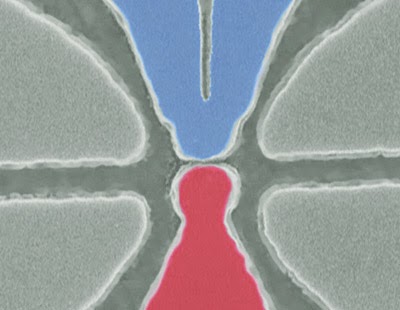
Well, electricity is a set of physical phenomenon that is an ever-growing topic in the field of physics. Generally, there are various mode of generating electricity but scientists from the University of Wurzburg have found a new way to generate electric current from ‘noise’. A device has been built in which two quantum dots has been used to generate electrical impulse from the voltage noise.

It’s a well-known fact that electronic devices generates a huge amount of heat that is needed to be dissipated, but instead of discarding this energy, using it to do useful work could transfigure the electronic industry forever. Re-using this energy means, more efficient electronic devices can be constructed. For more than a decade physicists have tried founding ways via which they can generate electrical currents from this ‘wasted heat energy’ so that they can make them do works, such as power electronic devices and finally they have reached a possible point.

How the experiment works?

In a simple statement, the experiment uses voltage noise to mimic the hot and cold spots of wasted heat and hence is not directly converting the heat energy loss into electrical impulses. These two quantum dots are nothing but disc of semiconductor about 300nm in diameter. They are kept at distance of 150nm so that they can exchange energy via coulomb coupling theory. Then three conducting leads are being introduced into the system, two to the upper quantum dots so that the current can flow across the dots and one to the lower quantum dot to a voltage source with superimposed noise at milivolt range.

Now, when the researchers increased the intensity of the noise applied to the lower quantum dot, they saw comparatively a larger amount of current generating in the upper quantum dot. Technically, the data followed a quadratic drift, doubling the voltage noise quadrupled the maximum current, where the current is measured in nanoamperes.

Is the Experiment ready for industrial process?

Well, though there is an initial success yet the researchers believe that the experiment is not ready for the industrial experience. Currently, the quantum dots are immersed in liquid helium in order to maintain them, clearly which cannot be used for consumer devices. Plus the researchers are also in doubt about whether the currents can be driven out in room temperature. Scientists are now finding ways to construct a device which can be operated at room temperature.

Hope, the scientists do find a way to build the device as because this is a great method of generating electric current and can limit the usage of fossil fuels and thermal energies which have debilitated environment drastically in recent years.


/Anuttam/

Tuesday, 7 April 2015

"Information is not erased but preserved in black holes"


Contrary to what we have been knowing for such a long time that, ‘Black Holes doesn't hold information and any document that is ever shredded into the “giant” hole is unlikely to be ever retrieved’, a new study at University of Buffalo contradicts this theory and may prove many physicists wrong. The new research comes with explicit theoretical calculation backing up the statement that “Black holes don’t erases the information instead preserves it”, an information which is stored but cannot be retrieved.

For years Scientists have argued that Black holes are the ultimate vault, entities that absorbs any information and then make it disappear forever leaving behind no trace of its origin. But according to the latest research done by Mr.Dejan Stojkovic, Phd, associate professor at University of Buffalo, ‘the information just doesn’t disappear’.

The research’s skeleton structure outlines how interaction between two particles emitted by black holes can reveal about the information what lies within, such as characteristics of the object that form the black hole to begin with, and the characteristics of the matter and energy drawn inside. Professor Stojkovic believes that his paper is important as it will help those scientists too who believed that ‘information in a black hole is not lost but didn’t able to prove it mathematically’, as his new paper presents strong mathematical calculation to prove that how the information is preserved.


The research have helped solving one of the greatest paradox in the history of astrophysics, i.e. “information loss paradox”, that have plagued many physicist for almost 40 years since the time when Stephen hawking first proposed that “black holes could radiate energy and evaporate over time”. Though hawking later said that he might be wrong in his theory and that ‘information may escape from the black hole’, integrating a never ending debatable topic among many astrophysicists that, ‘the subject of whether and how it’s possible to recover the information from a black hole’.


But Stojkovic’s paper may be the answer for the all the queries, as not only it dealt with the particles that black hole emits, but have also taken into the account about the ‘subtle interaction of the particles’, which have proved that, it is possible for an observer standing outside of a black hole to recover information about what lies inside. The whole research was funded by the National Science Foundation and could sketch new face of truth for the “black hole” theory.

/Anuttam/

Sunday, 5 April 2015

'Robotic Ants will be the future of the working industry'


It might be nightmares for some while ‘advancement’ for others as, ‘Festo’, a German based global industrial control and automation engineering firm have just found out replacements for the modern day factory workers. The most interesting fact though is this future replacements are nothing but Ants, yes an army of artificially intelligent cyborg ants, synthetic critters that are smart enough to work together for a common goal.

Known as ‘Bionic ants’, these 5 inches long, 6 inches wide and 1.5 inches tall smart creatures can even cope-up with fluctuating production demands and increase their working rate accordingly in order to meet higher increasing demands in less time. The coolest part of all is that they can wirelessly talk basic things to each other like ‘what’s up’ (talking frequently won’t make them bored while working).

As we all know Ants have been used to teach us the virtues of hard work, a fact not lost on the engineers at ‘Festo’. The German based company’s primary aim for building this project was to “demonstrate how autonomous individual components can solve a complex problem together, working together as an overall networked system”. These lithium battery-powered ‘Bionic ants’ are genetically engineered to work together for solving complex problems and shared common vision to reach a particular goals and last but not the least to be ‘cooperative’ for the greater good of the society.

These complex build algorithmic-controlled ‘bionic ants’ are equipped with a bulbous plastic abdomen, six strong jointed legs, two antennae, serrated pincers and faces that appears to be grinning. The bodies of these smart creatures are made up of lightweight polyamide in order to make them bulky and the circuitry was 3-D printed in order to study the structure of its operation.

How these Synthetic Ants will work?


These ANTS (Autonomous Networking technology) is a very advance mode of technical stuff but the working model of the ants is not as complex-able as it looks. The two pincers sticking out from their heads will allow them to pick up, drag and drop small objects and to recharge they should simply put their antennae feelers against a charging station. Smart, right?


Well, these genetically engineered Ants are not just for sales yet, but their importance in the industrial society is certainly intriguing and have left us with many questions, most important one of which is “ Will Bionic Ants replace the modern day Human factory workers”? What you think?

/Anuttam/

Saturday, 21 March 2015

"Could Smart-watches be as harmful as Cigarettes"


Technology is advancing nowadays as faster as never before, making the human life more sophisticated and affable  but there is always a question lying in the ongoing process that , ‘How much will this advancement affect our hygienic life’. Wearable devices have been the latest trends in the modern-day world, but some researcher concluded that this wearable devices could be as harmful as Cigarettes. Back in 1946 when smoking a Cigar and wearing a longcoat was probably called ‘fashion’ and even ads came in newspaper with headlines such as ‘More doctors smoke camels than any other Cigarette’, but back then very few of the Doctors would have analyzed the future where smoking could be a crucial cause of an irremediable disease known as cancer.

In a similar vein, researchers and consumers have raised a question that ‘Whether wearable devices will be affecting their health in the upcoming future’? As researchers have already proved that cellphones gives off a very low level of radiation, which can lead to traumatic diseases such as brain tumor, lung cancer, disturbed blood rhythms and several other health problems if held for an extended period of time.

While there is no definitive research on the health effects of a wearable devices, but surely we can take a glimpse from the theory of the 'cell-phone radiation factor'. Back in 2011, when WHO (World Health Organization) conducted a panel with 31 scientists from 14 countries they reached an arguably unbiased conclusion, that small radiation that comes out from the mobile devices can indeed cause cancer and similar kind of traumatic diseases and affect our day to day lives.

Scientists further concluded that Cell-phones are 'possibly carcinogenic' and that the device could be as harmful as smoking a cigarette in a day. They also told that 'surfing the web or texting a message would be a much better option for your health than holding a cell-phone inches away from your brain( That is why there were serious concerns about Google Glass when it was first announced and why we've been told to use hands-free devices when talking on cellphones).

But who will try to explain this point to an ‘Apple fan-boy’, or a 'Google fanatic' who just waits a long time to buy their favorites brand new products with the latest trends being the ‘smart-watch’ Well, while some has told against smart-watches, there are some scientist who have concluded that wearable devices cannot be as harmful as the researchers predicts it could be. Dr. Joseph Mercola, a physician said that long wearable devices cannot be harmful to a person’s health as long as the device does not a have 3G connections built into it, and even if there are any possibilities of harmfulness, they are very minimal.

Researchers have also raised concerns that having powerful batteries so close to the body for extended periods of time can also lead to many health issues. Yet here we are in 2015, with companies like Apple and Samsung encouraging us to buy gadgets that we should attach to our bodies all day long. So, what the consumers should do? Perhaps we can look at how the researchers themselves handles their smart-phone.

/Anuttam/

Sunday, 15 March 2015

"Apple's big idea finally put into market"


Well, at-last Apple Inc came up with their long planned idea and has been able to put it into the market as they are almost ready to launch their first smartwatch named ‘i-watch’. As we all are aware of the fact that Apple Inc always launches things that generally exists in the market, be it ‘i-phone or the i-mac’,  all the features are already been known to the customers long before, but the thing that differentiate Apple Inc from the other companies is their design and appetite for creativity.

As of Apple’s other devices, ‘i-watch’ will also have almost similar kind of features that is already been there in Motorola’s smart-watch ‘Moto-360’ but it is the brand name and Apple’s combination of competence that will decide whether the smartwatch will attract customers or not. As, of now Apple’s chief executive Mr. Tim Cook said that watch will be available for three models-standard, sports and Edition and will also come in two sizes-38 mm and 42 mm with a variety of straps. It also has a sapphire crystal display and a sidewinder, known as a digital crown, which can be used to zoom in, scroll and navigate the interface.

What are the features?

So, let’s have a look at the features that this wearable device is bringing on with it. First and foremost, Apple is very popular in developing ‘health and fitness’ apps which has helped millions of its users over the years and that’s why they have included some of the quite popular apps in i-watch too. Starting from an app called ‘strava’ which is used for determining the amount of distance traveled in a day, the company has worked on several other similar kinds of ‘Health and Fitness apps. Coming to navigatory apps, ‘Uber’ and ‘Citymapper’ has been programmed in order to make the travel plan a lot easier than before. Other than these apps, Instagram, Evernote and Twitter have also been featured in wrist-optimization form in order to make your life a whole lot easier.


So, now that we know what the features are, let’s have some insight onto the price list. As far as the price lists stands, Apple’s i-watch can start from as low as 299 euros to as high as 13,500 euros, but it depends on you that what edition you want to buy? As we know Apple products are not something we cannot live without, but definitely it makes your life simpler and in a many way ‘creative’. The watch is set to be launch on April 24 in United Kingdom.

/Anuttam/